
A Scented Journey: Exploring the Various Types of Fragrance
Embarking on a scented journey can be as evocative as it is enlightening, given that the sense of smell stands as a vital function for humans in myriad ways, from protection against environmental hazards to the deep-seated interweaving with emotional memory.
This article sets out to explore fragrance, a term that captures the essence of a market driven by our profound connection to scent. With the capability to detect a staggering one trillion different odours, the human olfactory system surpasses past estimations and unveils the complexity and richness of our sensory world. Perfume, an artful manifestation of this system, relies on creating olfactory experiences that can evoke emotion, conjure memories, and even play a role in interpersonal connections and mate selection.
Understanding fragrances and their impact on our lives goes beyond the pleasure of a pleasing scent; it is a glimpse into how deeply intertwined our sense of smell is with the limbic system, influencing our emotions and memories. As we delve into the main types of fragrances, from the intimate whisper of perfume samples to the bold statements of signature scents, we will uncover how these aromatic concoctions can shape our mental health, social interactions, and even subconscious choices. Whether it’s the allure of a fragrance that hints at a shared genetic makeup or the solitary quest to improve the longevity of olfactory acuity, this article lays out the aromatic bread crumbs for a journey through the captivating world of scents.

Exploring the Main Types of Fragrances
When exploring the landscape of fragrances, one encounters the four major families:
Floral, Oriental, Woody, and Fresh. Each family, with its distinct characteristics, is a gateway to myriad scents that captivate the senses and underscore the perfume’s uniqueness.
● Floral Family:
Renowned for their fresh and captivating aroma, floral scents are often derived from the essence of roses, jasmine, and lilies.
Subfamilies include Soft Floral, offering a subtle, powdery touch, and Floral Oriental , where flowers meet the exotic warmth of spices.
An example of this is Gucci Flora.
● Oriental Family:
With rich spices and balmy resins, the Oriental family is celebrated for its gourmand characteristics—sweet, dense, and sensual.
Perfumes in this family envelop wearers in a powdery embrace, often finding favour with both men and women.
● Woody Family:
Embodying warm, rich compositions, Woody fragrances typically lean towards masculine preferences.
Sub-categories such as Woods, Mossy Woods, and Dry Woods illustrate the depth and variety within this family.
● Fresh Family:
Universally crowd-pleasing, Fresh fragrances are cherished for their airy qualities.
The family spans a wide range of sub-categories, boasting scents that are as invigorating as they are diverse, favoured by all genders.
Fragrances unfold in layers, described by ‘notes’, each with a role to play in the perfume’s life cycle. These aromatic notes emanate from both individual raw materials and accords, which are skilfully blended to create a harmonious scent bouquet.
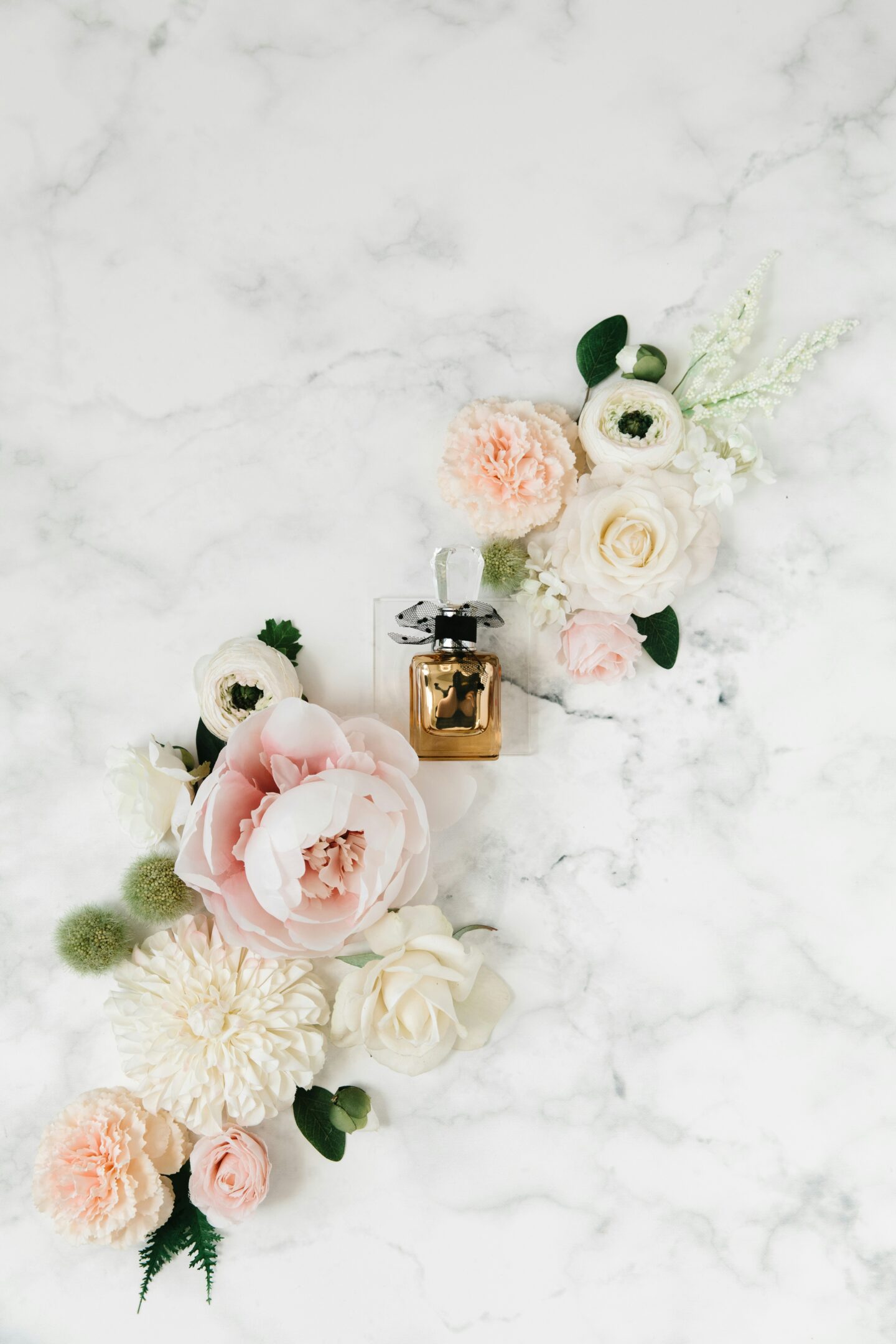
● Notes in Fragrance:
Top notes, the lightest and most volatile, greet the senses first but are
fleeting.
Heart notes emerge after the initial sparkle, forming the core of the
fragrance.
Base notes, rich and enduring, provide the lasting impression hours after
application.
The lingering power of a perfume is determined by its concentration, with levels ranging from the light spritz of an Eau Fraiche to the intensity of an Eau de Parfum. The fragrance wheel, a tool devised by perfume expert Michael Edwards, groups scents into these families. Each is marked by its own colour on the wheel, with adjacent hues indicating complementary scents and opposing ones suggesting
contrast. This visual guide aids enthusiasts in finding the perfumes best suited to their taste, whether they’re searching for perfume samples to try or seeking their signature scent. By understanding these intricacies, one may better navigate the world of fragrance, transforming each spritz into a statement that resonates with personal style and preference.
Conclusion
Complexity in perfumes is achieved through accords , the artful handshake between different components producing a distinctive scent. The soul of the fragrance, an accord may be simple, imitating a specific scent using just a few raw materials, or complex, knitting together numerous notes to craft a unique olfactory tapestry.
In conclusion, our exploration of the resplendent world of fragrances reveals the intricate interplay between our sense of smell and the emotional landscapes that scents so vividly paint. From the lush bouquets of the Floral family to the earthy depths of Woody aromas, we’ve uncovered the unique characteristics and personal resonances that perfumes evoke within us. Each fragrance family not only
complements personal taste but also tells a story, woven from the ephemeral dance oftop, heart, and base notes, which together shape the soul of a scent.
Understanding the nuances of fragrance families and the complexity of perfume notes enhances our appreciation for this aromatic art form and its impact on our lives. As we continue to navigate the olfactory odyssey, let us remember that each bottle of scent
offers not just a fragrance but an experience, a memory, and a distinct expression of identity—an olfactory fingerprint as unique and enigmatic as the wearer themselves.
Whether seeking intimate samples or a signature scent, may your aromatic journey be as enriching as it is fragrant, opening doors to new emotional terrains and uncharted sensory realms.
LoveRosiee
xx
If you’d like to contribute a guest post, please press here.
You May Also Like

Rimmel // Gift Review

Au Naturel With Lee Stafford Hair
